
What is Lomography Lady Grey 400?
Created by the company Lomography, Lady Grey 400 is a classic black and white film with an ISO rating of 400, crafted to deliver a beautifully smooth grain and a wide spectrum of tones. It's versatile enough to adapt to varying lighting conditions and can be developed using standard black and white chemistry.
Lomography is often associated with experimental films that produce bold color shifts and unpredictable results, but Lady Grey 400 takes a more traditional approach. Created by Lomography, Lady Grey is a panchromatic black and white film with an ISO rating of 400, designed to produce smooth grain, moderate contrast, and a broad tonal range while remaining versatile enough for changing lighting conditions. Unlike many of Lomography's more experimental stocks, Lady Grey aims to produce a faithful monochrome interpretation of a scene rather than a stylized one. It can be developed using standard black and white chemistry, making it an accessible choice for photographers looking for a reliable everyday black and white film.
Lady Grey feels best suited to casual, observational photography rather than situations where absolute technical perfection is the goal.
I can see it working especially well for:
- Street photography
- Travel
- Family and everyday life
- Portraits in natural light
- Older buildings and small towns
- Overcast weather
- Lo-fi cameras
- Double exposures and other experiments
It seems like the kind of film that benefits from being used rather than saved. Its ISO 400 speed makes it easy to carry around, and its balanced contrast leaves room for both careful photographs and less predictable experiments.
Shooting My First Roll
I had been wanting to shoot more black and white film, but I wasn't sure which stock would suit the way I photograph. Much of my work depends on color, especially when I'm photographing travel, landscapes, concerts, or small details that catch my attention. Shooting Lady Grey meant setting color aside and paying closer attention to light, texture, shape, and contrast.
I decided to load the roll for [location]. The ISO 400 speed made it feel like a practical choice because I knew I would be moving between different lighting conditions. I didn't have to reserve it for a perfectly bright day, and I could photograph more instinctively without constantly worrying about whether there would be enough light.
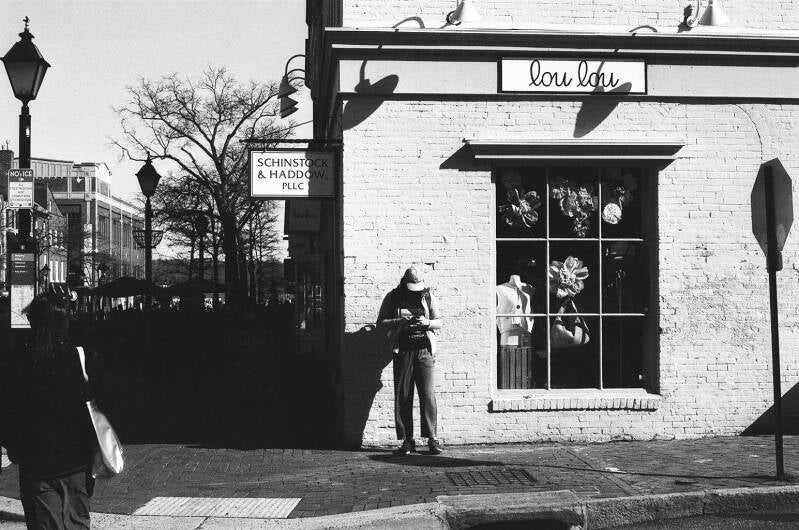
I loaded the roll when I headed to Old Town Alexandria for the day..At first, I found it difficult to imagine everything without color. I am usually drawn to warm light, painted buildings, colorful signs, flowers, clothing, and other details where color plays an important role. With black and white film, I needed to find a different reason to make each photograph.
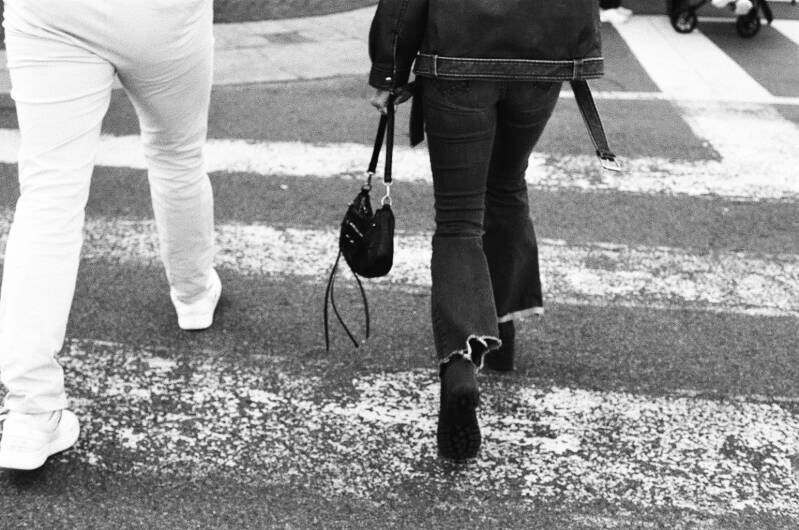
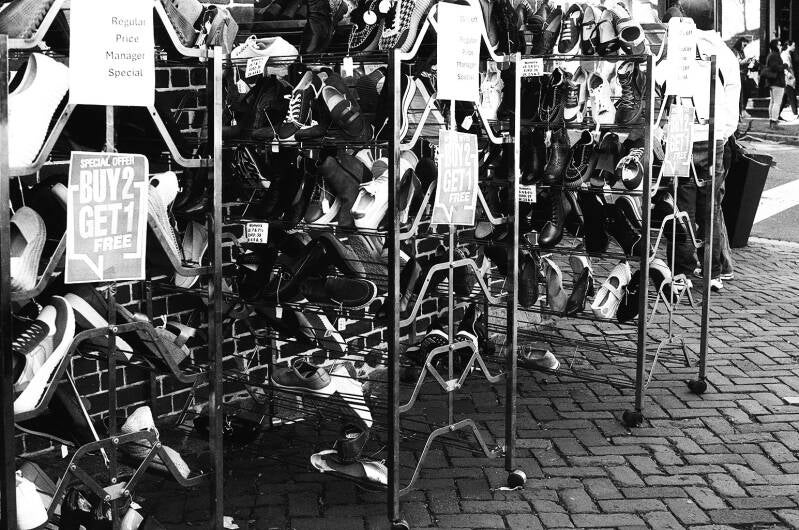
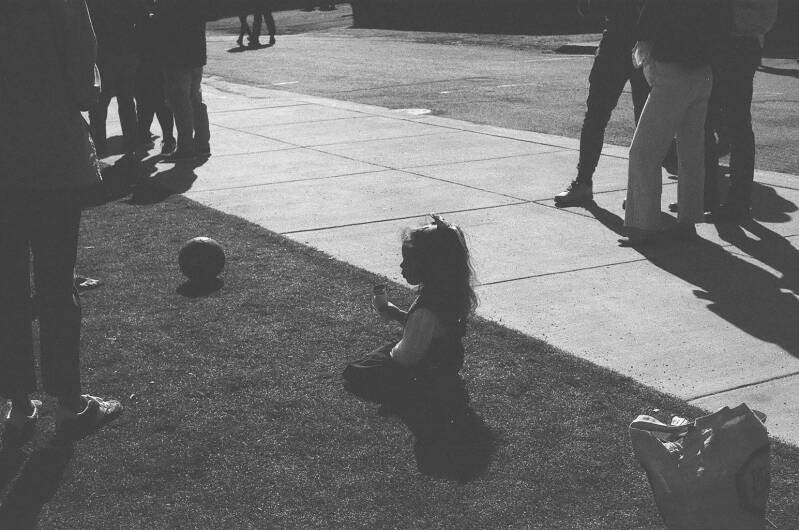
I started paying more attention to shadows, repeating shapes, facial expressions, weathered surfaces, and the way people separated from their surroundings. Scenes that might have seemed ordinary in color became more interesting because of their texture or tonal contrast. At the same time, some subjects that caught my attention in person no longer felt as strong once I imagined them in black and white.
That shift was one of the most useful parts of shooting the roll. It reminded me that black and white photography is not simply color photography with the saturation removed. It asks you to look at a scene differently before pressing the shutter.
One thing I noticed throughout the roll was that the photographs felt softer than I expected. The images lacked the punchy contrast I usually associate with black and white photography, and the brightest areas never quite reached a clean, bright white. Instead, the tonal range leaned more toward mid-grays, giving many of the photographs a flatter appearance.
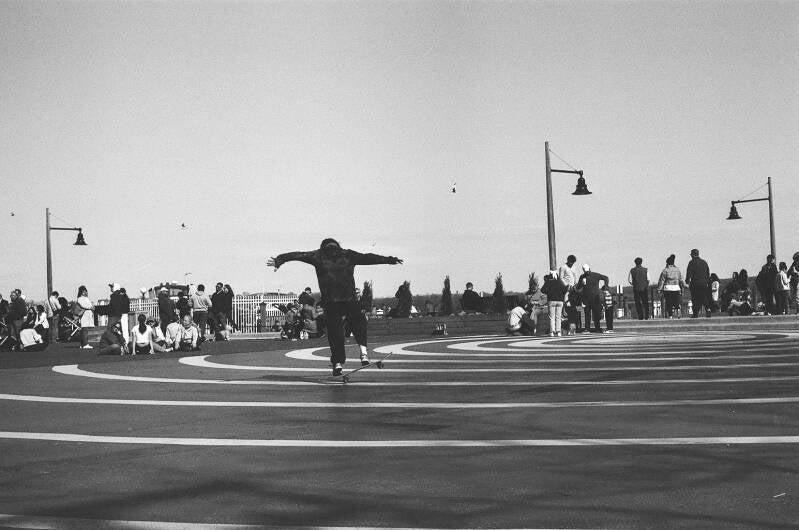
At this point, I'm hesitant to attribute that entirely to Lady Grey itself. Since I haven't examined the negatives or rescanned the roll, it's possible that the lab's scanning choices played a significant role in the final look.
Black and white film leaves a great deal of room for interpretation during scanning. Contrast, the white and black points, and overall tonal response can all vary depending on the scanner, software, and the person making the adjustments. Before forming a final opinion of Lady Grey, I want to rescan the negatives myself and compare the results with the lab scans. It wouldn't surprise me if the film has more contrast and tonal separation than I'm seeing here.
Final Thoughts
After shooting my first roll of Lomography Lady Grey 400, I came away with mixed first impressions. I enjoyed the slower, more intentional process of photographing in black and white, and the film encouraged me to look beyond color and pay closer attention to light, texture, and composition. That alone made the experience worthwhile.
As for the film itself, I'm still forming my opinion. The lab scans felt softer and flatter than I expected, with muted contrast and whites that never seemed to reach a bright, clean white. Whether that's a characteristic of Lady Grey or simply the result of the scanning process is something I can't confidently answer yet. Before making a final judgment, I want to examine the negatives and rescan the roll myself to see how much of the final look comes from the film versus the scan.
Even so, I don't regret choosing Lady Grey for my introduction to black and white photography. It's an approachable, versatile ISO 400 film that performs well in a variety of lighting conditions and encourages experimentation without feeling intimidating. More importantly, it challenged me to think differently about how I compose a photograph.
For now, I wouldn't call Lady Grey my favorite black and white film, but I also don't think one roll is enough to define it. I plan to give it another chance after rescanning these negatives and shooting it in different conditions. Sometimes the first roll teaches you more about how to see than it does about the film itself.
Add comment
Comments